
 (210) 510-9193
Poteet Homes · website project
A home-builder website, from first look to inquiry.
Services, photographs, local context and a way to get in touch: explore how those pieces come together in Sparrow Group's website project for Poteet Homes, a South Texas home builder.
The business and the website
Give home buyers a clear starting point.
Choosing a home builder involves more than liking a photograph. A visitor needs to understand the services, find relevant plans or property information, and establish whether the business serves their area.
The Poteet Homes website brings those subjects together with a route to contact the business. The homepage introduces the work, while navigation leads visitors into more specific information.
For a home-service business, the same questions make a useful starting point: what do you offer, where do you work, and what should someone explore before requesting a conversation?
Follow the visitor's questions
Answer the questions that come before a call.
The website moves from an introduction to more detail and then to ways of starting a conversation.
Does this builder offer what I need?
The homepage identifies the home-building business and describes its services. Your opening content should help a visitor recognize the work they came to find.
What can I explore?
The Properties page separates build plans and land, with listing details and filter controls. For a comparable catalog, define the details customers need and a process for keeping measurements, prices and availability accurate.
How do I start a conversation?
Contact links, phone and email information, and a message form provide different routes to an inquiry. Choose the options that match how your business responds.
The visual presentation
Give each image and heading a job.
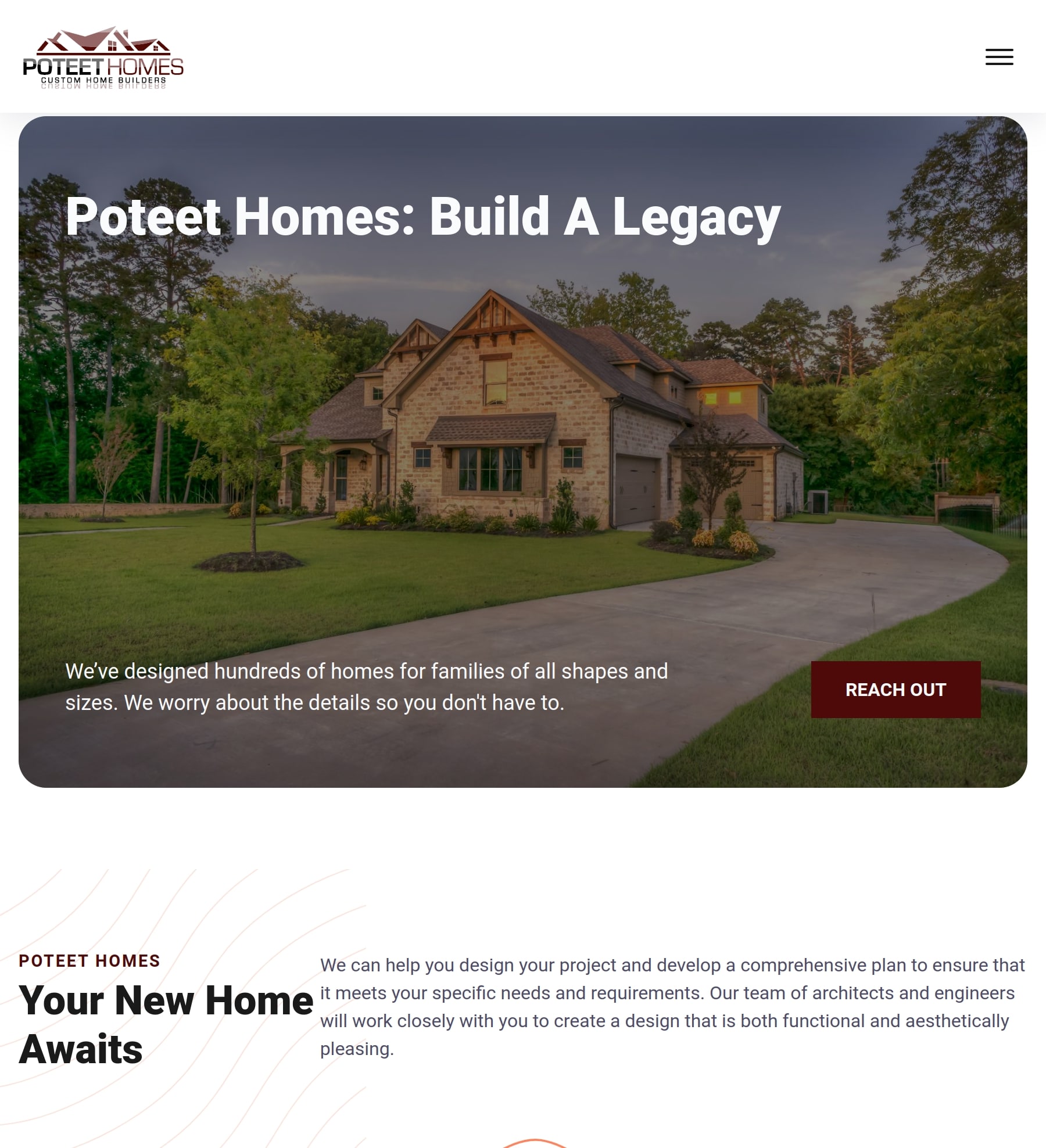
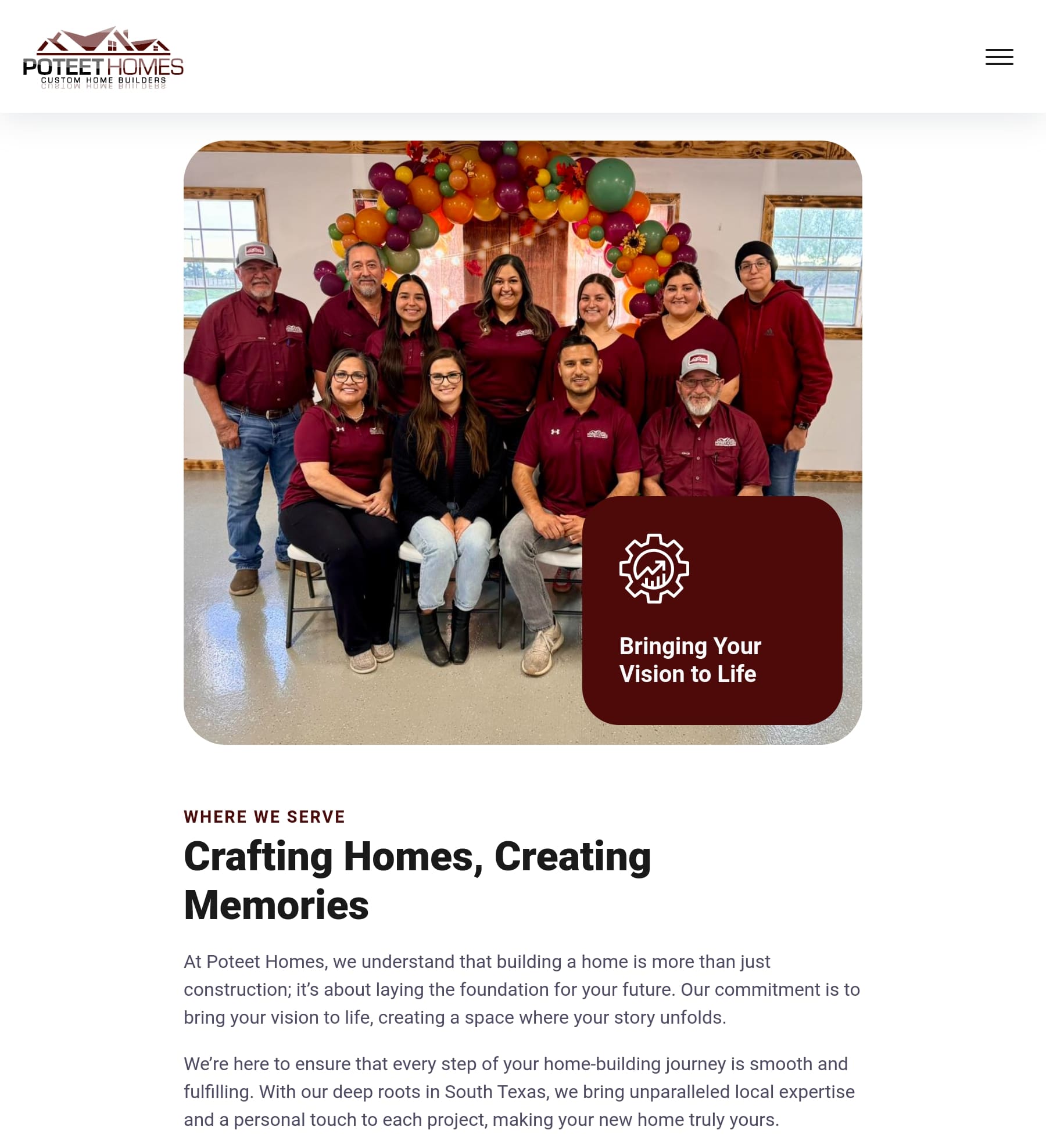
A large house photograph anchors the opening view. Farther down, a group photograph and a contrasting red message panel change the rhythm of the page. Prominent headings separate the subjects so visitors can scan before reading more closely.
Service-area content adds context that a photograph cannot supply: whether the business works where the visitor needs help.
For your website, we can plan which photographs represent your work, what each section should explain, and how the next action fits into the layout. Those choices become part of a defined website design scope.
Plan for discovery
Connect the website to the searches your customers make.
Service and location information also give you a foundation for planning search content. Start with the work you want to win and the areas you can serve, then answer the practical questions people ask before choosing a business.
Alongside the design, decide how you will track inquiries and which ones become useful sales conversations. That makes future website decisions more concrete.
Planning a comparable project
Choose the scope your business needs.
A project example helps you ask better questions. Your proposal should define the actual pages, features and responsibilities.
- Services and areas. What work do you offer, where do you work, and which questions determine whether an inquiry is a fit?
- Examples and information. Which photographs, project details and service explanations can you provide or approve?
- The next action. Should someone send a message, call, request a quote or choose a meeting time?
- Specialized features. Catalogs, listing filters and other custom features need their own scope. The brochure website plans do not automatically include every feature shown in a project example.
- Ongoing arrangements. Read the update, account ownership and handover terms and compare the planning costs.
Apply the discussion to your business
What should your visitors understand before they contact you?
Share your current website, the services you offer and the next step you want customers to take.


